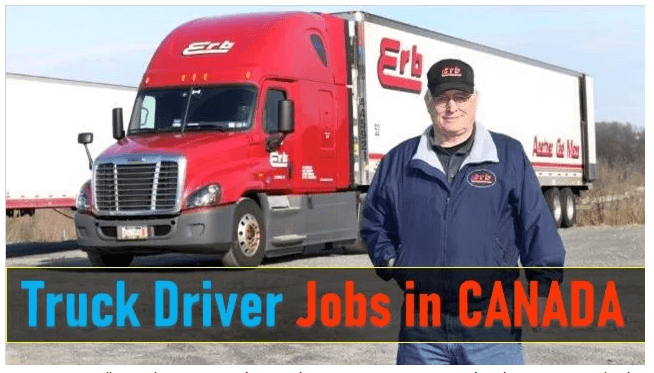
Truck Driver Jobs in Canada with Visa Sponsorship for Foreigners
Canada’s booming economy, coupled with its vast geography, has created a high demand for skilled truck drivers. The country’s expansive road network and thriving logistics sector mean that truck drivers play a crucial role in maintaining the flow of goods across provinces and beyond. As industries continue to grow, the need for qualified truck drivers has surged, presenting a golden opportunity for foreign workers seeking employment in Canada.
For foreigners eyeing a career in Canada, truck driving offers not only a well-paying job but also the chance to secure visa sponsorship. This pathway is particularly appealing for those who possess the necessary driving skills and are eager to make a life in Canada. This comprehensive guide will delve into the requirements, salary expectations, and the top regions offering the highest pay, providing a detailed roadmap for aspiring truck drivers from abroad.
Entry-Level Skills and Experience Required
To embark on a truck driving career in Canada, foreign workers need to meet certain qualifications and possess specific skills. Although the requirements may vary slightly depending on the region and employer, the following are the general qualifications needed for entry-level positions:
- Valid Commercial Driver’s License (CDL): The most fundamental requirement is a valid CDL. In Canada, this is typically a Class 1 or Class A license, which permits the holder to operate large trucks and tractor-trailers. Foreign applicants may need to undergo additional training and testing to convert their foreign license into a Canadian equivalent.
- Experience: While some companies are willing to hire drivers with minimal experience, others may require at least one to two years of verifiable experience driving heavy vehicles. Experience in handling different types of trucks, such as flatbeds, tankers, or refrigerated trucks, can be a significant advantage.
- Clean Driving Record: A spotless driving record is essential. Employers look for drivers who have a history of safe driving, with no major traffic violations or accidents. This requirement is crucial for both insurance purposes and ensuring the safety of goods transported.
- Basic Knowledge of Truck Maintenance: Entry-level drivers should have a basic understanding of truck maintenance and be able to perform routine checks on their vehicle. This includes checking oil levels, brakes, tires, and lights, as well as understanding how to troubleshoot minor mechanical issues.
- Physical Fitness: Truck driving can be physically demanding, requiring drivers to load and unload cargo, sit for long periods, and sometimes navigate challenging terrain. Therefore, good physical health and stamina are necessary.
- Language Proficiency: English or French language proficiency is often required, as communication is key when following instructions, reading road signs, and interacting with dispatchers and customers.
- Adaptability to Long Hours: Truck driving often involves long hours on the road, sometimes in remote areas. Drivers must be prepared to work irregular hours, including nights, weekends, and holidays.
These entry-level skills and experiences form the foundation for a successful career as a truck driver in Canada. Employers value reliability, safety, and the ability to adapt to Canada’s diverse driving conditions.
Top Companies hiring truck drivers now in Canada
Regions with the Highest Payment Structure
Canada’s vast landscape and economic diversity result in varying pay scales for truck drivers depending on the region. Below are the top five regions in Canada offering the highest payment structures for truck drivers, along with a simplified description of their payment systems:
- Alberta:
- Average Salary: CAD 60,000 – CAD 80,000 per year
- Payment Structure: Alberta offers one of the highest wages for truck drivers, largely due to the province’s booming oil and gas industry. Drivers in Alberta often transport goods related to these industries, including heavy machinery and hazardous materials, which contributes to higher pay. Overtime pay and bonuses for long-haul trips are common.
- British Columbia:
- Average Salary: CAD 55,000 – CAD 75,000 per year
- Payment Structure: British Columbia’s rugged terrain and busy ports necessitate skilled drivers, especially for logging and freight transportation. The pay structure here includes a base salary with additional compensation for difficult routes, mountainous driving, and fuel surcharges.
- Ontario:
- Average Salary: CAD 50,000 – CAD 70,000 per year
- Payment Structure: Ontario, being the most populous province with a thriving manufacturing sector, offers competitive salaries for truck drivers. Drivers are often paid per mile, with additional earnings for deliveries within the Greater Toronto Area (GTA), where traffic and congestion can add to the complexity of the job.
- Saskatchewan:
- Average Salary: CAD 52,000 – CAD 68,000 per year
- Payment Structure: Saskatchewan, known for its agriculture and mining industries, pays truck drivers well, particularly those involved in transporting agricultural products and raw materials. The payment structure here includes a base salary with potential bonuses during peak farming seasons and for long-haul deliveries.
- Quebec:
- Average Salary: CAD 48,000 – CAD 65,000 per year
- Payment Structure: Quebec’s unique mix of industries, including manufacturing and forestry, offers truck drivers steady employment with competitive wages. The pay structure is often a combination of hourly wages and per-mile rates, with additional compensation for bilingual drivers who can communicate in both English and French.
These regions not only offer higher-than-average salaries but also provide various incentives and bonuses that can significantly boost a truck driver’s income.
Salary Expectations for Immigrants in Canada
For immigrant truck drivers, salary expectations can vary based on experience, location, and the type of cargo being transported. Below is a table summarizing the average salary expectations for immigrant truck drivers in Canada, followed by a brief overview:
| Experience Level | Annual Salary (CAD) | Remarks |
|---|---|---|
| Entry-Level (0-2 years) | 45,000 – 55,000 | Starting salaries, with potential for rapid increases. |
| Mid-Level (2-5 years) | 55,000 – 70,000 | Increased earnings with more experience and specialized skills. |
| Experienced (5+ years) | 70,000 – 85,000 | Top earners, often involved in specialized or long-haul routes. |
| Owner-Operators | 90,000 – 120,000+ | Higher earnings potential, with added responsibilities. |
In summary, immigrant truck drivers can expect a wide range of salaries depending on their experience and the region in which they work. Entry-level positions offer a strong starting point, with significant potential for income growth as drivers gain experience and take on more specialized roles. Additionally, those who invest in becoming owner-operators can significantly increase their earnings, albeit with the added responsibility of managing their own vehicles and business expenses.
Visa Sponsorship Process for Truck Drivers in Canada
One of the key attractions of pursuing a truck driving career in Canada is the availability of visa sponsorship for qualified foreign workers. This process involves several steps, including securing a job offer, obtaining a work permit, and eventually applying for permanent residency if desired. Here’s a detailed overview of the visa sponsorship process:
- Securing a Job Offer:
- The first step in obtaining visa sponsorship is to secure a job offer from a Canadian employer. Employers in Canada who are experiencing labor shortages are often willing to hire foreign workers to fill these roles. Websites like Job Bank Canada, Indeed, and specific trucking company websites are excellent resources for finding these job opportunities. Networking and connecting with recruitment agencies that specialize in the transportation industry can also be beneficial.
- Labor Market Impact Assessment (LMIA):
- Once a job offer is secured, the Canadian employer must obtain a Labor Market Impact Assessment (LMIA) from Employment and Social Development Canada (ESDC). An LMIA is a document that proves there is a need for a foreign worker to fill the job and that no Canadian worker is available to do so. This is a crucial step, as a positive LMIA is required for the work permit application.
- Applying for a Work Permit:
- After the LMIA is approved, the next step is to apply for a work permit. This can be done through Immigration, Refugees and Citizenship Canada (IRCC). The work permit allows you to work legally in Canada for the employer who offered you the job. You will need to provide several documents, including the job offer letter, the LMIA approval, proof of identity, and sometimes proof of financial stability to support yourself in Canada.
- Medical Examination and Police Clearance:
- Depending on the country of origin and the nature of the job, you may be required to undergo a medical examination and provide a police clearance certificate. These requirements ensure that you meet the health and safety standards of Canada.
- Arriving in Canada and Starting Work:
- Once your work permit is approved, you can travel to Canada and begin your employment as a truck driver. It’s important to abide by the conditions of your work permit, including the specific employer and job role. If you wish to change jobs or employers, you may need to apply for a new work permit.
- Pathway to Permanent Residency:
- Many foreign truck drivers in Canada aspire to become permanent residents. Programs such as the Provincial Nominee Program (PNP) and the Canadian Experience Class (CEC) under the Express Entry system provide pathways to permanent residency for skilled workers. Gaining Canadian work experience as a truck driver can significantly boost your chances of being selected for permanent residency.
Challenges and Opportunities for Foreign Truck Drivers
While the prospect of working as a truck driver in Canada is appealing, it’s essential to be aware of the potential challenges and opportunities that come with the job.
Challenges:
- Cultural and Language Barriers:
- Adjusting to a new culture and language can be challenging. While many regions in Canada are bilingual, with English and French as official languages, the majority of truck driving jobs require proficiency in English. Foreign workers may need to improve their language skills to communicate effectively on the job.
- Weather Conditions:
- Canada is known for its harsh winters, particularly in the northern regions. Truck drivers must be prepared to drive in snow, ice, and sub-zero temperatures. This requires not only physical endurance but also the ability to handle vehicles in challenging weather conditions.
- Long Hours and Isolation:
- Truck driving often involves long hours on the road, sometimes spanning several days or even weeks. This can lead to feelings of isolation, especially for those who are new to the country and away from their families. It’s important to be mentally prepared for the demands of long-haul driving.
Opportunities:
- Job Security and High Demand:
- The trucking industry in Canada is experiencing a significant labor shortage, which translates to job security for qualified drivers. This high demand ensures that truck drivers have stable employment with opportunities for overtime and bonuses.
- Career Advancement:
- Starting as a truck driver can open doors to other opportunities within the logistics and transportation sector. With experience, drivers can move into supervisory roles, training positions, or even start their own trucking business as owner-operators.
- Exploring Canada:
- Truck driving offers the unique opportunity to travel across Canada’s diverse landscapes, from the bustling cities of Ontario to the scenic routes of British Columbia. For those who enjoy travel and adventure, this job provides a chance to see the country while earning a living.
Conclusion
In the ever-expanding landscape of Canada’s transportation industry, truck driving stands out as a profession that not only offers substantial financial rewards but also provides a stable and secure pathway for foreign workers seeking a new life in Canada. The combination of competitive salaries, the opportunity for visa sponsorship, and the potential for career growth make truck driving an attractive option for immigrants.
As you consider this career path, it’s crucial to prepare thoroughly, from securing the necessary licenses and skills to understanding the visa sponsorship process. By doing so, you position yourself for success in a country that values the essential services provided by truck drivers.
With Canada’s continued growth and the increasing demand for skilled drivers, now is the ideal time for foreign workers to explore the opportunities available in the trucking industry. Whether you’re drawn by the promise of financial stability, the chance to explore new regions, or the opportunity to build a permanent life in Canada, truck driving offers a fulfilling and prosperous career path for those ready to take the wheel.